
The Nature of Casino Games
Casino games are designed to provide entertainment while also benefiting the house, which means they are rooted in chance rather than skill. Games like slots, roulette, and blackjack involve elements of randomness that can make the outcomes unpredictable. For instance, slot machines use random number generators (RNGs) to determine outcomes, ensuring that each spin is independent of the last. Interestingly, players often seek platforms that offer online casino fast withdrawal uk options, as it enhances their gaming experience by providing quick access to their winnings, ensuring that no amount of analysis can guarantee a win, as each result is entirely random.
However, understanding the rules and odds of each game can significantly influence a player’s experience. For example, in games with an element of strategy, such as poker or blackjack, players can utilize their knowledge to make informed decisions that may increase their chances of winning. While the outcome still involves a degree of luck, skill and strategy can, in effect, predict more favorable results in the long run.
Moreover, the psychology of gaming plays a crucial role in how players perceive their ability to predict outcomes. Many players hold on to the belief that they can “feel” when a win is due, leading them to make bets based on intuition rather than statistical probability. This belief often stems from cognitive biases, which can cloud judgment and lead to a misunderstanding of how chance works in the context of these games.
The Role of Probability and Odds
Understanding probability is essential for anyone looking to engage with casino games effectively. Each game has a defined set of odds that indicate the likelihood of certain outcomes occurring. For instance, in roulette, the odds of hitting a single number are 1 in 37 in European roulette, given that there are 37 possible outcomes. Knowledge of these odds allows players to make better-informed bets, but it does not alter the inherent randomness of the game.
In repetitive or long-term play, the law of large numbers suggests that probabilities will hold true over time. While individual sessions may fluctuate due to chance, the house edge remains constant, meaning that over countless games, the casino will consistently emerge as the winner. Therefore, while players can understand and calculate probabilities, they cannot predict specific outcomes of individual games.
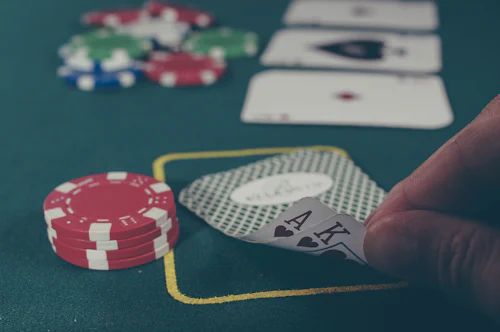
For example, in blackjack, players can employ strategies like card counting to gain an edge, but casinos have measures to counteract this, such as shuffling cards more frequently or using multiple decks. Thus, while probability plays a role in informing strategies, it does not provide any reliable means of forecasting individual outcomes, keeping the games rooted in luck.
The Influence of Technology on Prediction
The rise of technology has introduced new dimensions to the playing field in the casino environment. Advanced algorithms and data analytics tools can analyze player behavior and game results to some extent. Although this technology may provide insights into patterns over time, it does not change the random nature of each game. For example, some players may use software to track outcomes, but the data still represents past results, not future predictions.
Additionally, with the advent of online casinos, machine learning algorithms increasingly influence game design and player interactions. While this enhances the gaming experience, it reinforces the idea that outcomes cannot be predicted accurately. Even the most sophisticated predictive models cannot account for the unpredictability ingrained in systems that rely on randomness.
Moreover, regulatory bodies oversee these technologies to ensure fairness in gaming. These regulations further highlight that while technology can enhance the gaming experience and understand broader trends, it cannot predict the outcomes of individual bets. Therefore, players must remain aware that despite technological advancements, the unpredictability of casino games remains unchanged.
The Myths Surrounding Outcome Prediction
Many myths circulate within the gambling community, particularly regarding outcome prediction. One prevalent myth is that past results can influence future outcomes, often referred to as the gambler’s fallacy. For example, in roulette, if a number has not appeared recently, some players may believe it is “due” to hit soon. However, this belief misrepresents how probability and independence operate within games of chance.

Another common myth is the idea that certain betting systems can guarantee wins, such as Martingale or Fibonacci strategies. While these systems may offer a structured betting approach, they do not overcome the mathematical edge that casinos hold. In high-stakes situations, players employing these strategies can end up losing significant sums, demonstrating that no betting system can modify the intrinsic randomness of casino games.
Furthermore, the allure of “hot” or “cold” tables can mislead players into believing they can predict outcomes based on perceived trends. In reality, these trends do not exist in a manner that can influence future results. Every spin of the wheel or deal of the cards is a separate event, emphasizing the importance of understanding the game mechanics rather than relying on psychological myths.
Conclusion and Understanding the Landscape of Casino Gaming
Ultimately, while some aspects of casino gaming can be studied and understood, the essence of chance is what keeps these games exciting and unpredictable. Players often navigate a mix of strategy, skill, and luck, but the house edge guarantees that over time, casinos will generally win. With a solid grasp of probability, players can enhance their decision-making processes, but predicting outcomes remains unattainable.
Players should approach casino games with a mindset centered around fun rather than expectation. Understanding the odds and employing strategies can improve the gaming experience, but it is vital to recognize the role that chance plays. A balanced approach, recognizing both the excitement and risks involved, fosters a healthier relationship with gaming.
At the end of the day, engaging with casino games should be about enjoyment rather than prediction. This mindset allows players to appreciate the thrill while understanding the limitations of their knowledge concerning outcomes. Embracing this perspective enables a healthier gambling experience, encouraging responsible participation while still enjoying the unpredictability that makes casino games so enticing.
